Contamination Control
Manufacturing Quality Control
Proactive Contamination Control
By implementing rqmicro's rapid microbial testing solutions, manufacturing quality control teams gain timely, quantitative insight into viable microbial contamination across critical utilities, raw materials, process streams, and manufacturing environments.
Instead of waiting several days for culture-based results, microbiologists can identify microbiological changes within hours and respond before they develop into significant quality risks.
This enables a shift from reactive to proactive contamination control. Quality teams can detect emerging trends earlier, investigate deviations faster, and implement corrective or preventive actions based on current microbial conditions. The result is improved process control, greater operational reliability, reduced contamination risk, and increased confidence in manufacturing quality.

Traditional Microbial Monitoring Creates Blind Spots
Microbial contamination can develop gradually within manufacturing processes, utility systems, and production environments.
However, conventional microbiological methods often provide results only after critical decisions have already been made, limiting the effectiveness of contamination control programs.
- Delayed visibility into microbial conditions
- Culture-based methods typically require days before actionable results become available. This delay reduces the ability to identify and respond to emerging contamination risks in a timely manner.
- Reactive rather than proactive decision-making
- Quality teams often rely on historical data when making operational decisions. By the time contamination is detected, the underlying issue may have already progressed and require more extensive corrective actions.
- Limited ability to identify trends and early warning signals
- Infrequent and delayed measurements make it difficult to recognize gradual increases in microbial activity, system deterioration, or changing process conditions before they become significant deviations.
- High cost of late intervention
- Delayed detection can lead to extended investigations, product holds, production interruptions, increased maintenance requirements, and other quality-related costs that could have been avoided through earlier action.
As manufacturing processes become increasingly complex and quality expectations continue to rise, organizations need faster access to microbiological information to maintain effective contamination control. Rapid microbial monitoring closes the gap between sampling and decision-making, enabling quality teams to detect changes sooner, respond more effectively, and maintain greater control over microbial risks throughout the manufacturing process.
How We Help
Seamless Integration into Existing Quality Control Programs
rqmicro enables manufacturers to enhance existing microbial monitoring programs with rapid quantification of viable microorganisms. The implementation approach is designed to generate actionable insights quickly while integrating smoothly into established quality and contamination control workflows.
1
Application Assessment
rqmicro works with the customer to understand current monitoring strategies, critical control points, and quality objectives. Together, the areas with the highest potential impact from rapid microbial testing are identified and prioritized.
2
Method Evaluation
Representative samples are analyzed to establish performance under real operating conditions. The evaluation generates confidence in the method's ability to provide reliable, quantitative microbial data for routine decision-making.
3
Workflow Integration
The rqmicro solution is incorporated into existing quality control processes and monitoring routines. Laboratory and quality personnel are trained to efficiently perform testing and interpret microbial data within their operational context.
4
Continuous Monitoring and Optimization
Rapid microbial measurements provide ongoing visibility into process and environmental conditions. The resulting trend data supports earlier interventions, more effective contamination control strategies, and continuous improvement of monitoring programs.
Benefits for Your Operation
Rapid microbial quantification delivers value far beyond faster test results.
By providing timely, actionable microbiological data, rqmicro enables quality control teams to strengthen contamination control programs, improve operational performance, and make more informed decisions. The benefits extend across technical, operational, and business functions, helping organizations reduce risk while increasing efficiency and process reliability.

Earlier Detection of Emerging Contamination Risks
Rapid quantification of viable microorganisms enables quality teams to identify microbiological changes significantly sooner than conventional methods. Earlier detection creates valuable time for investigation and intervention before quality is impacted.

Improved Operational Efficiency
Faster results accelerate investigations, reduce waiting times for critical decisions, and help focus resources where they are needed most. Quality and operations teams can respond more quickly and effectively to changing conditions.

Enhanced Process Understanding
Frequent access to quantitative microbial data provides deeper insight into process performance, utility systems, environmental conditions, and contamination sources. This improved visibility supports more informed quality decisions and stronger contamination control strategies.

Reduced Quality Risk and Cost
Early intervention helps prevent contamination events from escalating into larger quality issues. Organizations benefit from fewer disruptions, reduced investigation efforts, optimized maintenance activities, and lower overall costs associated with microbial contamination.
Solutions for This Application
Brief introduction explaining how the products support this application.
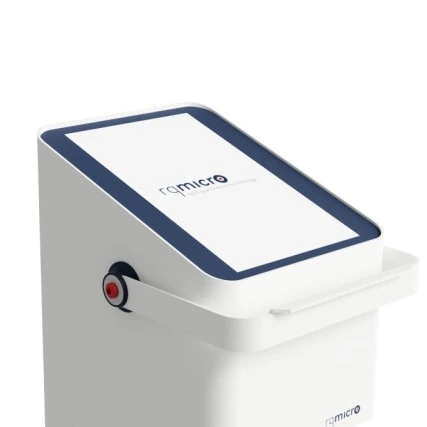
rqmicro.COUNT
A cartridge-based flow cytometer that rapidly quantifies total viable bacteria and specific pathogens using the rqmicro Test Kits. The instrument delivers actionable results in as little as 30 minutes. rqmicro.COUNT is designed for both laboratory and on-site use, enabling reliable microbiological monitoring.
Key Benefits
- Decentralized testing
- High-speed single-cell analysis
- Easy to use

Cloud Solution
The rqmicro Cloud Solution is a secure, browser-based platform for storing, analyzing, and sharing microbiological test results. With customizable dashboards, automated alerts, and reporting tools, it supports efficient monitoring, compliance, and data-driven decision-making across multiple sites.
Key Benefits
- Centralized Data Management
- Real-Time Monitoring & Alerts
- Simplified Reporting & Compliance
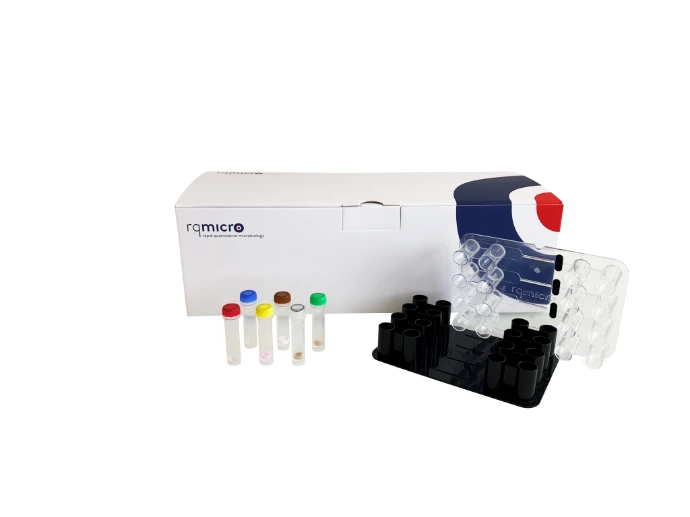
Test Kits
The rqmicro Test Kits are ready-to-use assay kits designed for rapid microbiological water analysis with rqmicro.COUNT. Available for Intact Cell Count (ICC), Legionella, and E. coli, they combine simple sample preparation with highly sensitive detection to deliver fast, reliable, and actionable results.
Key Benefits
- Rapid Results
- Reliable Detection
- Easy-to-Use Workflow
Frequently Asked Questions
Here are some common questions about the test method, instrumentation and user requirements.
rqmicro combines three core technologies in a single workflow:
- Microbiological Assays detection and quantification of microorganisms including immunoassays for the selective quantification of target bacteria.
- Microfluidic cartridge technology with integrated immunomagnetic separation (IMS) for automated sample processing.
- Flow Cytometry for rapid detection and quantification of bacteria, including viability assessment.
This integrated approach enables rapid microbiological testing without the need for lengthy cultivation steps.
Single-use cartridges provide several advantages:
- Ensure standardized workflows
- Reduce maintenance requirements
- Minimize the risk of cross-contamination
- Eliminate complex cleaning procedures
- Enable operation by non-specialist users
The cartridge-based design supports both laboratory and field applications.
The rqmicro platform is designed for the detection and quantification of total bioburden and also specific bacteria. Depending on the assay, users can analyze:
- Total viable bacteria (Intact Cell Count)
- Total bacteria (Total Cell Count)
- Legionella (L.p. SG 1, L.p. SG 1-15 and Legionella spp.)
- E. coli (incl. Big 6 and O157)
Traditional culture methods only detect microorganisms that grow on agar plates. Many bacteria can remain viable but fail to form colonies under cultivation conditions.
rqmicro uses cultivation-independent flow cytometry, allowing the detection of viable cells regardless of their ability to grow on culture media. This provides faster results and a more complete picture of microbial contamination.
Flow cytometry is a laser-based analytical method that measures individual cells suspended in a fluid stream.
As cells pass through the laser beam, fluorescent signals are generated and detected by the instrument. Thousands of cells can be analyzed every second, enabling rapid and highly sensitive microbiological testing.
rqmicro uses fluorescence-based flow cytometry together with viability staining. Fluorescent dyes interact differently with live and dead cells based on membrane integrity and physiological status.
The instrument analyzes these fluorescence patterns to distinguish viable cells from non-viable cells, providing rapid live/dead information within the measurement process.
Viability information helps users:
- Assess microbiological risk more accurately
- Evaluate treatment effectiveness
- Detect bacteria that may be missed by culture methods
- Monitor changes in water systems in near real time
This enables faster operational decisions and improved process control.
VBNC stands for Viable But Non-Culturable.
These bacteria are alive and may remain metabolically active, but they do not grow on standard culture media. As a result, conventional cultivation methods can underestimate the true microbial load.
Flow cytometry can detect these cells, allowing a more comprehensive assessment of water quality and microbiological risk.
qmicro.COUNT is designed for routine operation with minimal training.
Users do not need to be flow cytometry experts. The cartridge-based workflow and automated analysis reduce operator dependency and simplify routine testing.


Contact an Expert
Christophe Gutknecht
Contact Us
Latest Blog Posts
Discover insights and solutions from rqmicro