Research Applications
Laboratories & Research
Unlock New Insights into Microbial Water Systems
rqmicro enables researchers to rapidly quantify and characterize microbial populations in water systems using advanced flow cytometry without requiring specialized cytometry expertise.
By providing direct access to Total Cell Counts (TCC), Intact Cell Counts (ICC), and targeted microbial quantification, researchers can investigate microbial dynamics with a level of speed and detail that is difficult to achieve using conventional cultivation methods alone.
The result is a deeper understanding of microbial processes across natural, engineered, and managed water systems. From studying treatment performance and biofilm formation to investigating viable but non-culturable (VBNC) bacteria and microbial community responses to environmental changes, rqmicro helps researchers generate high-quality quantitative data that supports scientific discovery and accelerates research outcomes.

Conventional Methods Limit Microbial Research
Water microbiology research increasingly requires fast, quantitative, and cultivation-independent methods to investigate complex microbial systems. However, many researchers continue to face methodological limitations that restrict both the scope and quality of their studies.
- Cultivation methods capture only part of the microbial picture
- Many microorganisms present in environmental samples cannot be readily cultivated or require highly specialized growth conditions. As a result, cultivation-based methods often underestimate microbial abundance and fail to capture important changes within microbial populations.
- Limited access to advanced flow cytometry
- Flow cytometry is widely recognized as a powerful tool for microbial analysis, yet traditional cytometry platforms often require significant expertise, complex workflows, and dedicated specialists. These barriers can limit adoption within environmental and water research laboratories.
- Challenges in studying dynamic microbial processes
- Processes such as stagnation, disinfection, biofilm development, microbial regrowth, and treatment performance often occur on timescales that are difficult to investigate using slow analytical methods. Researchers require rapid and reproducible measurements to capture these dynamics accurately.
- Need for robust and reproducible quantitative data
- Research projects increasingly demand high-quality datasets that support publication, collaboration, and long-term monitoring studies. Variability in analytical methods and complex workflows can make it difficult to achieve the consistency required for meaningful comparisons across experiments and study sites.
As research questions become more complex and interdisciplinary, laboratories need analytical tools that combine scientific rigor with operational simplicity. Access to rapid, quantitative microbial analysis enables researchers to investigate previously inaccessible questions and generate deeper insights into microbial systems.
How We Help
Bringing Advanced Flow Cytometry into Routine Research Workflows
rqmicro has simplified microbial flow cytometry to make this powerful analytical technology accessible to a broader range of research laboratories. The implementation process is designed to help researchers rapidly establish reliable workflows and begin generating publishable data.
1
Define the Research Application
rqmicro works with researchers to understand the scientific objectives, sample types, and analytical requirements of the project. Together, the most suitable workflows, staining protocols, and measurement strategies are identified.
2
Establish and Verify the Method
Representative samples are analyzed to demonstrate performance under real research conditions. This step helps establish confidence in data quality, reproducibility, and suitability for the intended research objectives.
3
Integrate into Experimental Workflows
The rqmicro platform is incorporated into routine laboratory procedures and research protocols. Researchers receive practical training that enables them to perform measurements confidently without requiring extensive flow cytometry expertise.
4
Generate Insights and Expand Research Capabilities
Once operational, researchers can rapidly collect quantitative microbial data across a wide range of experimental conditions. The resulting datasets support hypothesis generation, publication activities, technology evaluation, and long-term research programs.
Benefits for Your Research
Advancing Research Through Accessible Microbial Flow Cytometry
rqmicro combines the scientific power of flow cytometry with the simplicity and robustness required for routine research applications. Researchers gain access to advanced microbial analysis capabilities that were previously limited to specialized cytometry laboratories.

Access Cultivation-Independent Microbial Data
Quantify microbial populations directly, including microorganisms that cannot be readily cultivated using conventional methods. This enables more complete characterization of environmental and engineered water systems.
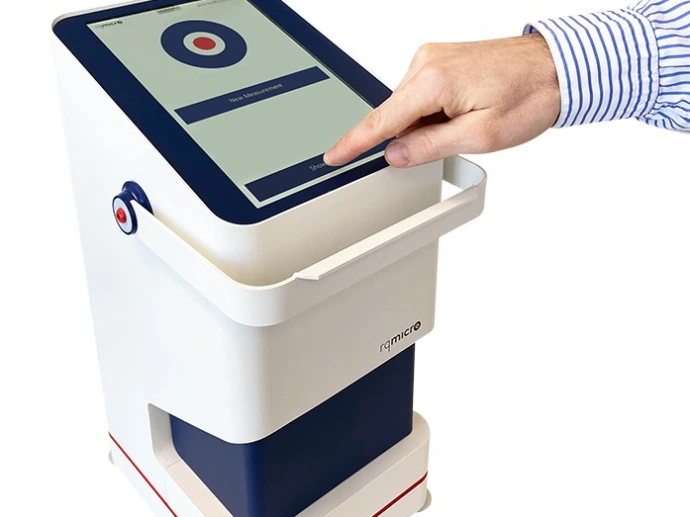
Simplify Flow Cytometry Workflows
rqmicro removes many of the traditional barriers associated with microbial flow cytometry. Standardized workflows, automated analysis, and intuitive operation make advanced microbial analysis accessible to a wider range of research groups.
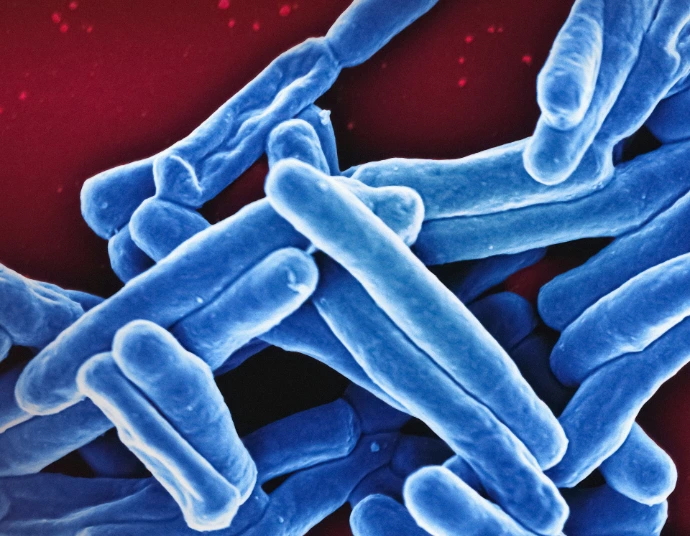
Study Microbial Dynamics in Real Time
Generate rapid measurements that reveal how microbial populations respond to operational, environmental, and treatment-related changes. Researchers can investigate dynamic processes with greater temporal resolution and scientific confidence.
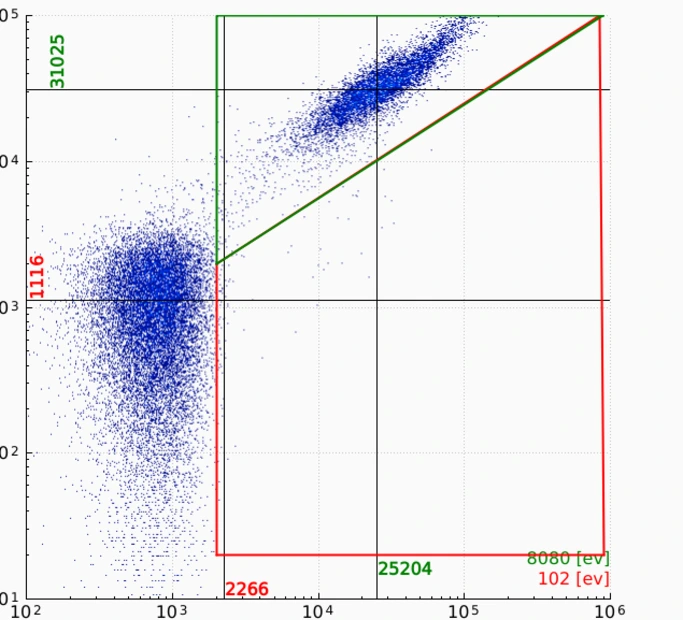
Generate High-Quality, Publishable Data
Robust quantification of TCC, ICC, and targeted microorganisms supports reproducible research and meaningful comparisons across experiments. The resulting datasets strengthen scientific publications, grant applications, and collaborative research initiatives.
Explore Research Cases
rqmicro enables researchers to apply flow cytometry to water microbiology using simple, standardized workflows and easy-to-use instrumentation.
This provides rapid, cultivation-independent quantification of microbial populations across environmental, drinking water, wastewater, and water reuse studies.
The following examples illustrate how this approach generates deeper insight into microbial dynamics, treatment performance, and water quality.
Microbial populations in water systems continuously respond to changes in hydraulic conditions, nutrient availability, temperature, and operational interventions. Flow cytometry enables researchers to quantify Total Cell Counts (TCC) and Intact Cell Counts (ICC) with high temporal resolution, allowing microbial population dynamics to be monitored in near real time.
This provides unique insight into how microbial communities evolve under conditions such as stagnation, flushing events, seasonal variations, or operational changes. Instead of relying on delayed cultivation results, researchers can directly observe population shifts as they occur and better understand the mechanisms driving microbial growth and decay.
Many microorganisms enter a viable but non-culturable state in response to environmental stress. These cells remain metabolically active but cannot be detected using conventional cultivation methods, creating a significant challenge for microbiological research.
Flow cytometry provides a powerful tool for studying VBNC populations by enabling direct assessment of cell integrity and viability. Researchers can investigate the induction, persistence, and potential recovery of VBNC organisms such as Legionella, generating insights that would remain inaccessible using cultivation-based approaches alone.
Environmental waters such as rivers, lakes, cooling towers, and wastewater often contain diverse microbial populations, particulate matter, and competing organisms that complicate cultivation-based analysis. Flow cytometry-based approaches can overcome many of these limitations and provide rapid quantification in challenging sample matrices.
This enables researchers to study the occurrence, persistence, and transport of microorganisms such as Legionella and E. coli across a wide range of environmental conditions. Faster access to quantitative data supports more comprehensive monitoring campaigns and facilitates higher-resolution studies of microbial ecology.
Biofilms represent one of the most important microbial reservoirs in engineered water systems, yet their formation and development remain difficult to study using traditional methods. Flow cytometry allows researchers to quantify cells released from biofilms and monitor changes in microbial populations associated with biofilm growth, maturation, and detachment.
By combining biofilm studies with measurements of TCC and ICC, researchers gain a deeper understanding of how biofilms influence microbial water quality and how operational conditions affect biofilm behavior over time.
Biofilms represent one of the most important microbial reservoirs in engineered water systems, yet their formation and development remain difficult to study using traditional methods. Flow cytometry allows researchers to quantify cells released from biofilms and monitor changes in microbial populations associated with biofilm growth, maturation, and detachment.
By combining biofilm studies with measurements of TCC and ICC, researchers gain a deeper understanding of how biofilms influence microbial water quality and how operational conditions affect biofilm behavior over time.
Water undergoes multiple treatment, storage, transport, and reuse processes before reaching its final point of use. Understanding how microbial populations change throughout this journey is essential for designing resilient and sustainable water systems.
Flow cytometry enables rapid and standardized quantification of microbial populations at multiple locations throughout the water cycle. Researchers can identify critical points of microbial growth, evaluate system stability, and better understand the ecological processes that shape water quality from source to consumption.
The development of advanced water treatment and reuse technologies requires analytical methods capable of detecting subtle changes in microbial water quality. Flow cytometry provides sensitive and quantitative measurements that support technology development, optimization, and validation.
Researchers can evaluate treatment efficiency, monitor microbial regrowth potential, and compare the performance of different treatment concepts using standardized microbial metrics. This creates a stronger scientific basis for advancing sustainable water management and water reuse strategies.
Beyond specific applications, flow cytometry fundamentally changes how microbial water systems can be studied. The ability to rapidly generate large volumes of quantitative microbial data enables higher sampling frequencies, larger experimental designs, and more detailed statistical analyses than are typically feasible with cultivation-based methods.
As a result, researchers can move from isolated measurements toward dynamic, systems-level investigations that reveal previously hidden relationships between microbial populations, environmental conditions, and treatment processes.
Solutions for This Application
Brief introduction explaining how the products support this application.
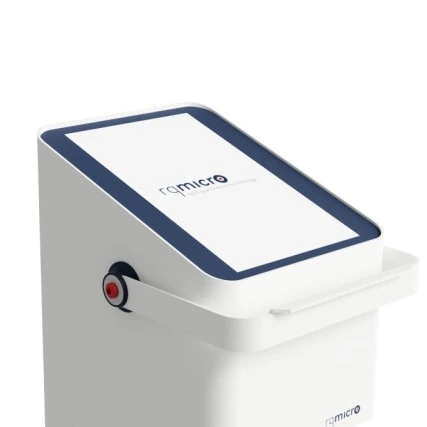
rqmicro.COUNT
A cartridge-based flow cytometer that rapidly quantifies total viable bacteria and specific pathogens using the rqmicro Test Kits. The instrument delivers actionable results in as little as 30 minutes. rqmicro.COUNT is designed for both laboratory and on-site use, enabling reliable microbiological monitoring.
Key Benefits
- Decentralized testing
- High-speed single-cell analysis
- Easy to use

Cloud Solution
The rqmicro Cloud Solution is a secure, browser-based platform for storing, analyzing, and sharing microbiological test results. With customizable dashboards, automated alerts, and reporting tools, it supports efficient monitoring, compliance, and data-driven decision-making across multiple sites.
Key Benefits
- Centralized Data Management
- Real-Time Monitoring & Alerts
- Simplified Reporting & Compliance
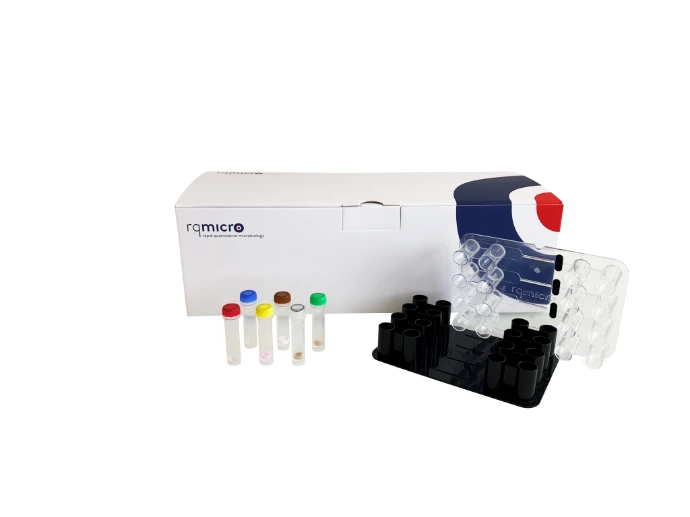
Test Kits
The rqmicro Test Kits are ready-to-use assay kits designed for rapid microbiological water analysis with rqmicro.COUNT. Available for Intact Cell Count (ICC), Legionella, and E. coli, they combine simple sample preparation with highly sensitive detection to deliver fast, reliable, and actionable results.
Key Benefits
- Rapid Results
- Reliable Detection
- Easy-to-Use Workflow
Frequently Asked Questions
Here are some common questions about the test method, instrumentation and user requirements.
rqmicro combines three core technologies in a single workflow:
- Microbiological Assays detection and quantification of microorganisms including immunoassays for the selective quantification of target bacteria.
- Microfluidic cartridge technology with integrated immunomagnetic separation (IMS) for automated sample processing.
- Flow Cytometry for rapid detection and quantification of bacteria, including viability assessment.
This integrated approach enables rapid microbiological testing without the need for lengthy cultivation steps.
Single-use cartridges provide several advantages:
- Ensure standardized workflows
- Reduce maintenance requirements
- Minimize the risk of cross-contamination
- Eliminate complex cleaning procedures
- Enable operation by non-specialist users
The cartridge-based design supports both laboratory and field applications.
The rqmicro platform is designed for the detection and quantification of total bioburden and also specific bacteria. Depending on the assay, users can analyze:
- Total viable bacteria (Intact Cell Count)
- Total bacteria (Total Cell Count)
- Legionella (L.p. SG 1, L.p. SG 1-15 and Legionella spp.)
- E. coli (incl. Big 6 and O157)
Traditional culture methods only detect microorganisms that grow on agar plates. Many bacteria can remain viable but fail to form colonies under cultivation conditions.
rqmicro uses cultivation-independent flow cytometry, allowing the detection of viable cells regardless of their ability to grow on culture media. This provides faster results and a more complete picture of microbial contamination.
Flow cytometry is a laser-based analytical method that measures individual cells suspended in a fluid stream.
As cells pass through the laser beam, fluorescent signals are generated and detected by the instrument. Thousands of cells can be analyzed every second, enabling rapid and highly sensitive microbiological testing.
rqmicro uses fluorescence-based flow cytometry together with viability staining. Fluorescent dyes interact differently with live and dead cells based on membrane integrity and physiological status.
The instrument analyzes these fluorescence patterns to distinguish viable cells from non-viable cells, providing rapid live/dead information within the measurement process.
Viability information helps users:
- Assess microbiological risk more accurately
- Evaluate treatment effectiveness
- Detect bacteria that may be missed by culture methods
- Monitor changes in water systems in near real time
This enables faster operational decisions and improved process control.
VBNC stands for Viable But Non-Culturable.
These bacteria are alive and may remain metabolically active, but they do not grow on standard culture media. As a result, conventional cultivation methods can underestimate the true microbial load.
Flow cytometry can detect these cells, allowing a more comprehensive assessment of water quality and microbiological risk.
qmicro.COUNT is designed for routine operation with minimal training.
Users do not need to be flow cytometry experts. The cartridge-based workflow and automated analysis reduce operator dependency and simplify routine testing.


Contact an Expert
Christophe Gutknecht
Contact Us
Latest Blog Posts
Discover insights and solutions from rqmicro