Process Water Quality Control
Industrial Water
Real-Time Process Water Control
Rapid microbiological monitoring enables industrial operators to control process water quality based on actual microbial load rather than delayed laboratory proxies.
This includes machining fluids, lubrication waters, washing systems, and auxiliary process water circuits where microbial growth can directly impact product quality, equipment lifetime, and process stability. By enabling near real-time visibility of microbial dynamics, operators can transition from reactive corrective interventions to proactive process water management, improving consistency, reliability, and operational efficiency.

Operational Blind Spots
Industrial process water systems operate under highly dynamic and application-specific conditions, where microbial growth can rapidly affect process performance, fluid stability, and equipment integrity.
Despite their critical role across machining, lubrication, and washing applications, microbiological control strategies are still largely based on delayed and indirect measurement approaches. This creates a persistent gap between actual system conditions and available operational insight, limiting the ability to manage process water proactively and with sufficient precision.
- Culture-based microbiology introduces long delays (typically 24–72+ hours), preventing timely response to microbial changes in fast-evolving process water systems
- Standard analytical methods do not detect viable but non-culturable (VBNC) organisms, resulting in incomplete assessment of microbial load and associated process risks
- Microbial growth in emulsified machining fluids, lubricants, and washing waters is accelerated by high nutrient availability, leading to rapid system degradation if not detected early
- Limited sampling frequency combined with heterogeneous system conditions creates significant blind spots, reducing the reliability of microbiological process control and weakening the ability to optimize treatment strategies
These limitations collectively constrain the ability of operators to maintain stable process water quality, resulting in reactive treatment approaches, increased chemical consumption, and avoidable impacts on process efficiency and equipment lifetime.
How We Help
Integrating Rapid Microbiology into Process Water Control
The implementation of rqmicro-based monitoring is designed to integrate seamlessly into existing industrial water management frameworks without disrupting production workflows:
1
Process Water System Mapping and Critical Point Identification
Key process water circuits are mapped, including machining coolant loops, lubrication systems, washing stages, and storage or recirculation tanks. Sampling locations are defined based on microbial risk, residence time, and process sensitivity.
2
Baseline Microbial Characterization Across Process Streams
Using rapid single-cell analysis, baseline microbial loads are established for each process water type. This includes differentiating between stable operating conditions and early indicators of microbial imbalance or contamination onset.
3
Integration into Routine Process Control Cycles
Rapid microbiological measurements are embedded into existing process water monitoring schedules. This enables frequent, standardized assessment of microbial conditions aligned with operational decision cycles rather than delayed laboratory reporting.
4
Closed-Loop Optimization of Treatment and Maintenance Strategies
Microbial data is directly used to adjust biocide dosing, filtration strategies, fluid replacement intervals, and system cleaning cycles, enabling continuous optimization of process water quality based on real-time biological feedback.
Benefits for Your Operation
Effective process water management depends on aligning treatment actions with actual microbial conditions in the system. Traditional approaches based on periodic laboratory testing do not provide the resolution required for modern high-performance industrial processes. Rapid microbiological monitoring closes this gap by enabling frequent, quantitative assessment of microbial dynamics across diverse process water applications, ensuring that operational decisions are based on current system conditions rather than historical data.

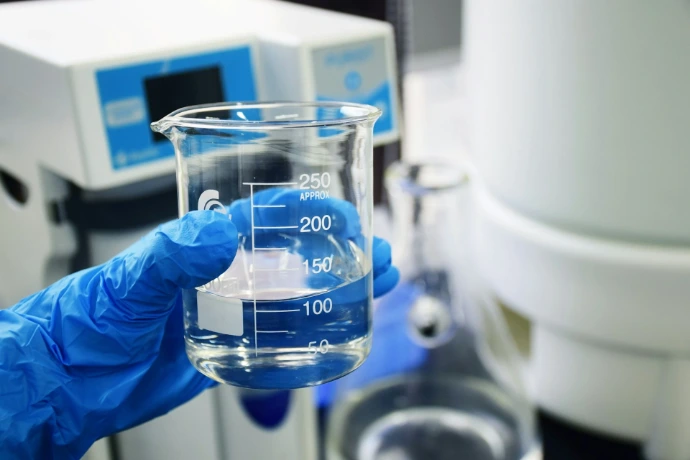
Faster detection of microbial contamination events
Enables early intervention in machining, lubrication, and washing systems before performance degradation occurs.
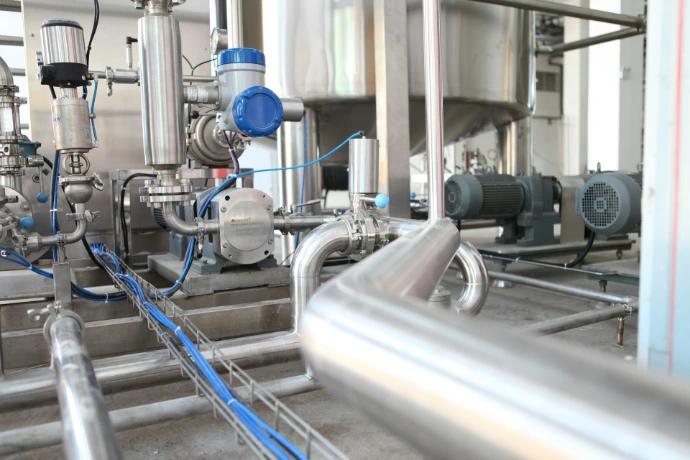
Reduced chemical and fluid consumption
Supports targeted use of biocides and longer usable life of process fluids through condition-based management.
Improved control of product quality and process stability
Reduces variability caused by microbial contamination in sensitive manufacturing and surface treatment processes.

Increased equipment reliability and reduced maintenance burden
Minimizes microbial-induced corrosion, clogging, and system fouling across process water circuits.
Solutions for This Application
Brief introduction explaining how the products support this application.
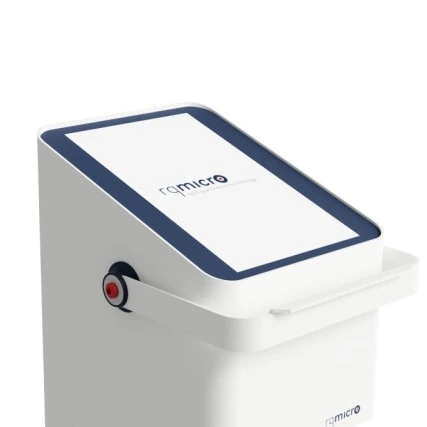
rqmicro.COUNT
A cartridge-based flow cytometer that rapidly quantifies total viable bacteria and specific pathogens using the rqmicro Test Kits. The instrument delivers actionable results in as little as 30 minutes. rqmicro.COUNT is designed for both laboratory and on-site use, enabling reliable microbiological monitoring.
Key Benefits
- Decentralized testing
- High-speed single-cell analysis
- Easy to use

Cloud Solution
The rqmicro Cloud Solution is a secure, browser-based platform for storing, analyzing, and sharing microbiological test results. With customizable dashboards, automated alerts, and reporting tools, it supports efficient monitoring, compliance, and data-driven decision-making across multiple sites.
Key Benefits
- Centralized Data Management
- Real-Time Monitoring & Alerts
- Simplified Reporting & Compliance
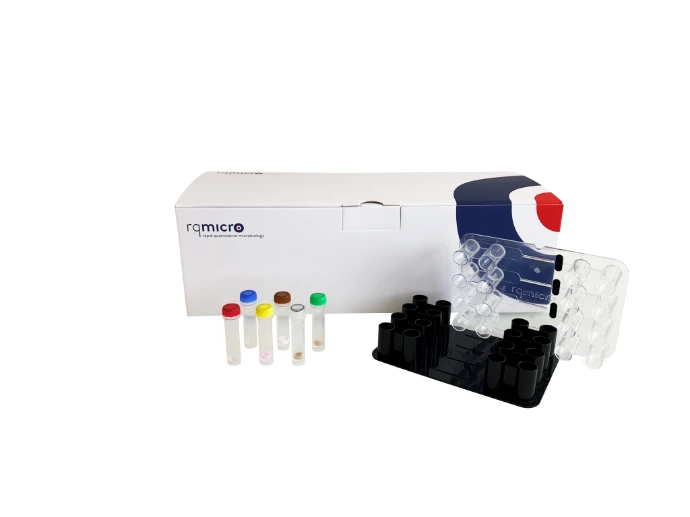
Test Kits
The rqmicro Test Kits are ready-to-use assay kits designed for rapid microbiological water analysis with rqmicro.COUNT. Available for Intact Cell Count (ICC), Legionella, and E. coli, they combine simple sample preparation with highly sensitive detection to deliver fast, reliable, and actionable results.
Key Benefits
- Rapid Results
- Reliable Detection
- Easy-to-Use Workflow
Frequently Asked Questions
Here are some common questions about the test method, instrumentation and user requirements.
rqmicro combines three core technologies in a single workflow:
- Microbiological Assays detection and quantification of microorganisms including immunoassays for the selective quantification of target bacteria.
- Microfluidic cartridge technology with integrated immunomagnetic separation (IMS) for automated sample processing.
- Flow Cytometry for rapid detection and quantification of bacteria, including viability assessment.
This integrated approach enables rapid microbiological testing without the need for lengthy cultivation steps.
Single-use cartridges provide several advantages:
- Ensure standardized workflows
- Reduce maintenance requirements
- Minimize the risk of cross-contamination
- Eliminate complex cleaning procedures
- Enable operation by non-specialist users
The cartridge-based design supports both laboratory and field applications.
The rqmicro platform is designed for the detection and quantification of total bioburden and also specific bacteria. Depending on the assay, users can analyze:
- Total viable bacteria (Intact Cell Count)
- Total bacteria (Total Cell Count)
- Legionella (L.p. SG 1, L.p. SG 1-15 and Legionella spp.)
- E. coli (incl. Big 6 and O157)
Traditional culture methods only detect microorganisms that grow on agar plates. Many bacteria can remain viable but fail to form colonies under cultivation conditions.
rqmicro uses cultivation-independent flow cytometry, allowing the detection of viable cells regardless of their ability to grow on culture media. This provides faster results and a more complete picture of microbial contamination.
Flow cytometry is a laser-based analytical method that measures individual cells suspended in a fluid stream.
As cells pass through the laser beam, fluorescent signals are generated and detected by the instrument. Thousands of cells can be analyzed every second, enabling rapid and highly sensitive microbiological testing.
rqmicro uses fluorescence-based flow cytometry together with viability staining. Fluorescent dyes interact differently with live and dead cells based on membrane integrity and physiological status.
The instrument analyzes these fluorescence patterns to distinguish viable cells from non-viable cells, providing rapid live/dead information within the measurement process.
Viability information helps users:
- Assess microbiological risk more accurately
- Evaluate treatment effectiveness
- Detect bacteria that may be missed by culture methods
- Monitor changes in water systems in near real time
This enables faster operational decisions and improved process control.
VBNC stands for Viable But Non-Culturable.
These bacteria are alive and may remain metabolically active, but they do not grow on standard culture media. As a result, conventional cultivation methods can underestimate the true microbial load.
Flow cytometry can detect these cells, allowing a more comprehensive assessment of water quality and microbiological risk.
qmicro.COUNT is designed for routine operation with minimal training.
Users do not need to be flow cytometry experts. The cartridge-based workflow and automated analysis reduce operator dependency and simplify routine testing.


Contact an Expert
Christophe Gutknecht
Contact Us
Latest Blog Posts
Discover insights and solutions from rqmicro